
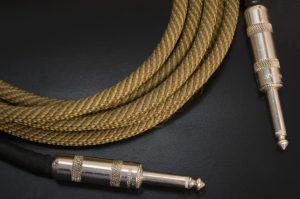
 The quality of your guitar cable can make a significant difference in your sound and could well be the weak link in your signal chain. Low quality cables can pick up interference causing unwanted hum and crackle. Going for a premium quality cable will typically have better shielding, which reduces noise. They also use higher quality components for the conductors and connectors for a secure connection to your in/output jack.
When buying a guitar cable, it’s essential to consider several factors to ensure you get a cable that suits your needs and enhances your sound quality. Here are the key aspects to look for:
1. Shielding
- Purpose: Protects against electromagnetic interference (EMI) and radio frequency interference (RFI).
- Types: Braided, spiral, and foil shielding. Braided offers the best protection, followed by spiral and foil.
2. Capacitance
- Purpose: Affects the high-frequency response of your signal.
- Measurement: Lower capacitance (measured in picofarads per foot, pF/ft) preserves high-end frequencies better, especially over longer distances.
3. Connectors
- Types: Straight or right-angle connectors depending on your setup needs.
- Quality: Look for high-quality connectors (like Neutrik or Switchcraft) for better durability and signal transfer.
4. Build Quality
- Materials: High-quality materials ensure durability and better sound.
- Strain Relief: Look for cables with good strain relief to prevent wear and tear at the connectors.
5. Length
- Considerations: Shorter cables (under 20 feet) generally preserve signal quality better. Longer cables can introduce more capacitance and signal loss.
6. Flexibility and Durability
- Flexibility: Important for ease of use, especially on stage.
- Durability: Look for rugged cables with flexible robust outer jackets for long-lasting performance.
7. Price and Warranty
- Price: While not always an indicator of quality, more expensive cables often offer better materials and construction.
- Warranty: A good warranty can be a sign of confidence from the manufacturer and provide peace of mind.
8. Noise Rejection
- Features: Cables with good noise rejection capabilities, such as multiple layers of shielding, are ideal for reducing hum and interference.
9. Reviews and Recommendations
- Sources: Look for reviews and recommendations from trusted sources, such as musicians, audio engineers, and reputable gear websites.
By considering these factors, you’ll be able to select a guitar cable that meets your needs, whether you’re playing live, recording, or practicing.