Choosing a guitar bridge depends on several factors, including the type of guitar, the style of music you play, and your personal preferences. Here are some key considerations:
-
- Type of Guitar:
-
- Electric Guitars: Typically use either fixed (hardtail) bridges or tremolo bridges.
-
- Acoustic Guitars: Generally have fixed bridges with either pins or pinless designs.
-
- Playing Style:
-
- Fixed Bridge (Hardtail): Ideal for players who prioritize tuning stability and sustain. Common in genres like rock, metal, and jazz.
-
- Tremolo Bridge: Suitable for players who use techniques like dive bombs and pitch bends, common in genres like rock, metal, and blues.
-
- Bridge Types for Electric Guitars:
-
- Tune-o-matic: Often found on Gibson-style guitars; provides excellent sustain and tuning stability.
-
- Strat-style Tremolo: Common on Fender Stratocasters; offers moderate pitch bend capabilities.
-
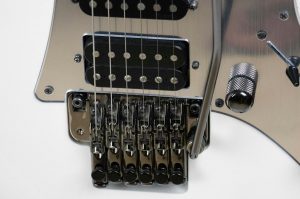
- Floyd Rose: Known for its locking mechanism that ensures tuning stability even with extensive use of the tremolo arm; popular in metal and rock.
-
- Bigsby: A vintage-style tremolo often used for subtle vibrato effects; found on some hollow-body and semi-hollow guitars.
-
- Bridge Types for Acoustic Guitars:
-
- Traditional Pin Bridge: Common and easy to find replacements; known for good transfer of string vibrations.
-
- Pinless Bridge: Easier string changes and a cleaner look; might be preferred for specific aesthetic or practical reasons.
-
- Personal Preferences and Needs:
-
- Adjustability: Some bridges offer more options for adjusting intonation and action.
-
- Maintenance: Consider ease of maintenance and availability of replacement parts.
-
- Aesthetic: The look of the bridge can also influence your decision, especially if you have specific visual preferences for your instrument.
Trying out different guitars with various bridge types can help you get a feel for what works best for you.