
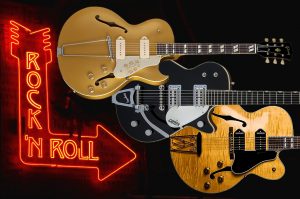
 The electric guitar, played a pivotal role in the creation and evolution of rock ‘n’ roll music. Here are the key ways the guitar contributed to this genre:
Sound and Amplification: The electric guitar, introduced in the 1930s and popularized in the 1950s, allowed for louder and more versatile sound production. Amplification made it possible to fill larger venues and led to the distinctive, energetic sound of rock ‘n’ roll.
Innovative Playing Techniques: Techniques like power chords, distortion, feedback, and effects pedals became hallmarks of rock ‘n’ roll. This added a raw, edgy sound to the music.
Lead Instrument Role: Unlike previous genres where the guitar often played a supporting role, it became the lead instrument of the music. Guitar solos and riffs became central features of songs, driving the melody and energy.
Cultural Icon: The electric guitar became a symbol of youth rebellion and cultural change. Rock ‘n’ roll musicians like Elvis Presley and later icons like Jimi Hendrix and Eric Clapton further elevated the guitar’s status as an instrument of innovation and expression.
Blues Influence: Rock ‘n’ roll borrowed heavily from blues music, particularly its use of the guitar. The 12-bar blues structure and expressive guitar techniques were adapted and amplified to create the new sound.
Through these elements, the guitar was instrumental in shaping the sound, style, and cultural impact of rock ‘n’ roll music.
Some guitarists stand out for their pioneering contributions to the creation of rock ‘n’ roll music:
- Chuck Berry: Often hailed as the “Father of Rock ‘n’ Roll,” Chuck Berry’s guitar riffs, showmanship, and songwriting were immensely influential. His songs like “Johnny B. Goode” and “Maybellene” are foundational rock ‘n’ roll tracks.
- Bo Diddley: Known for his distinctive rhythm, the “Bo Diddley beat,” he played a crucial role in shaping the sound of rock ‘n’ roll. His use of syncopated rhythms and innovative guitar techniques set him apart.
- Buddy Holly: Rock ‘n’ roll wouldn’t be the same without his contributions. His songwriting style, characterised by catchy melodies and relatable lyrics, influenced many future musicians. He was one of the genre’s true pioneers.
- Scotty Moore: As Elvis Presley’s guitarist, Scotty Moore’s playing was integral to the early sound of rock ‘n’ roll. His work on songs like “That’s All Right” and “Heartbreak Hotel” helped define the genre.
These guitarists, among others, were instrumental in creating and popularising the sound of rock ‘n’ roll during its formative years in the 1950s.
Several iconic guitars of the era became symbols of rock ‘n’ roll in its early days.
- Gibson ES-350T (Chuck Berry): Chuck Berry often played a Gibson ES-350T, which contributed to his distinctive sound. He later became associated with the Gibson ES-335.
- Gretsch 6128 Duo Jet (Bo Diddley): Bo Diddley’s use of the Gretsch 6128 Duo Jet helped define his sound. He is also known for his custom rectangular guitars, which became part of his unique image.
- Gibson Les Paul (Les Paul): Les Paul himself, a pioneer in the development of the solid-body electric guitar, played this model extensively. The Gibson Les Paul became one of the most iconic guitars in rock history.
- Fender Stratocaster (Buddy Holly): Buddy Holly was one of the first rock ‘n’ roll musicians to popularize the Fender Stratocaster. His use of this guitar influenced countless others in the genre.
- Gibson ES-295 (Scotty Moore): Scotty Moore, Elvis Presley’s guitarist, frequently played a Gibson ES-295. His work with Elvis helped bring rock ‘n’ roll to a wider audience, making the guitar an iconic symbol of the genre.
These guitars, played by legendary musicians, not only produced the sounds that defined rock ‘n’ roll but also became visual symbols of the genre’s rebellious and innovative spirit.